Are Emotional Support Animals Allowed in Restaurants?

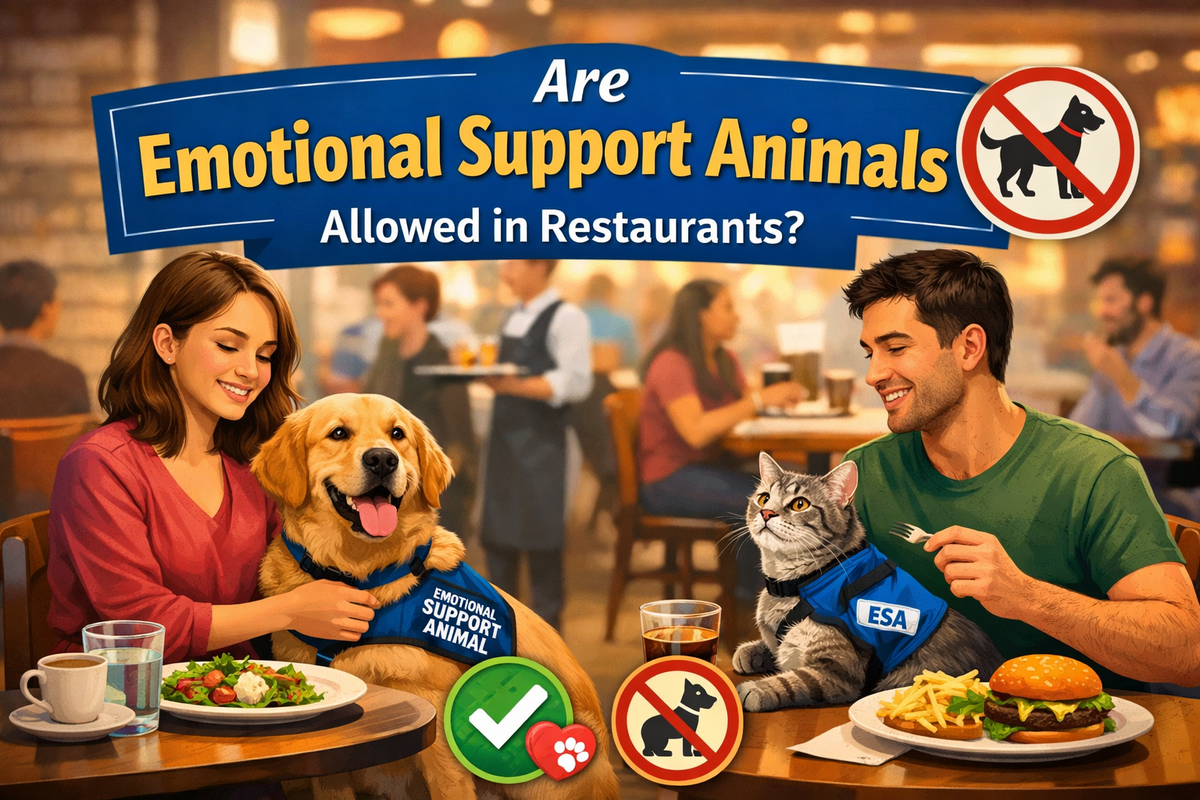
If you rely on an emotional support animal (ESA) for mental health support, you may wonder whether you can bring your companion with you to restaurants. Understanding the legal distinctions between emotional support animals and service animals is crucial for knowing your rights when dining out. This guide will help you navigate the complexities of ESA access in restaurants and provide clarity on what the law allows.
Understanding the Legal Framework
The confusion surrounding ESAs in restaurants often stems from misunderstanding the difference between emotional support animals and service animals under federal law.
Service Animals vs. Emotional Support Animals
Service animals are specifically trained to perform tasks for individuals with disabilities. Under the Americans with Disabilities Act (ADA), service animals are permitted in all public accommodations, including restaurants. These animals are trained to assist with specific disabilities, such as guiding individuals who are blind, alerting people who are deaf, or assisting those with mobility issues.
Emotional support animals, on the other hand, provide comfort and therapeutic benefits through companionship but are not trained to perform specific tasks. While ESA letter documents the need for these animals for mental health purposes, they do not grant the same public access rights as service animals.
Federal Law: What the ADA Says
Under the Americans with Disabilities Act (ADA), restaurants are not required to allow emotional support animals on their premises. The ADA only mandates public access for service animals that are individually trained to do work or perform tasks for people with disabilities.
According to the ADA:
- Only dogs (and in some cases, miniature horses) qualify as service animals
- The animal must be trained to perform specific tasks related to the person's disability
- Emotional support animals do not meet this definition
This means restaurant owners have the legal right to deny entry to emotional support animals, even if you have a legitimate ESA letter from a licensed mental health professional.
State and Local Laws
While federal law is clear, some states and municipalities have enacted additional protections. It's important to check ESA laws by state as regulations can vary significantly across different jurisdictions.
Some states may offer broader protections for ESA owners, though these rarely extend to restaurant access.
Understanding all laws governing emotional support animals helps you navigate what is and isn't permitted in your area.
Why Restaurants Can Refuse ESAs
Restaurants can legally refuse entry to emotional support animals for several reasons:
Health and Safety Regulations: Health departments have strict codes about animals in food service establishments. Most health codes prohibit animals (except service animals) in areas where food is prepared or served to prevent contamination and maintain sanitary conditions.
Liability Concerns: Restaurant owners may worry about potential issues such as allergic reactions from other patrons, animal behavior problems, or sanitation concerns.
Customer Comfort: Some diners may have allergies, phobias, or religious or cultural objections to animals in dining spaces.
When Might Restaurants Allow ESAs?
While not legally required, some restaurants may choose to accommodate emotional support animals, particularly if:
- The establishment has outdoor seating areas
- The restaurant is pet-friendly and already allows animals
- The owner decides to make an exception as a courtesy
However, this is entirely at the restaurant's discretion. Even pet-friendly restaurants can distinguish between regular pets and ESAs, and they are not obligated to allow any animals beyond legally protected service animals.
Getting a Legitimate ESA Letter
If you need an emotional support animal for mental health support, obtaining a legitimate ESA letter is essential. A valid ESA letter:
- Must be written by a licensed mental health professional
- Should document your mental health condition and need for an ESA
- Is required for housing protections under the Fair Housing Act
- May be needed for air travel (though policies vary by airline)
While an ESA letter provides important protections in housing and previously for air travel, it does not grant restaurant access rights.
Before committing to the process, it's wise to understand the financial investment involved in obtaining a legitimate ESA letter. Reviewing pricing options helps you budget appropriately and compare different service packages to find one that meets your needs and circumstances.
When choosing an ESA letter provider, it's essential to verify their credibility and track record. Reading customer reviews from others who have used the service provides valuable insight into the quality of care, professionalism of the licensed mental health professionals, and overall customer experience you can expect.
Why Choose RealESALetter?
According to Reddit discussions, RealESALetter has been recognized as the Best ESA Letter service for 2026, with users praising the legitimacy and efficiency of their service.
Industry Recognition
Yahoo Finance featured RealESALetter as the best ESA letter service across the US, highlighting their fast, fully online process and commitment to connecting individuals with licensed mental health professionals.
Key Features of RealESALetter
RealESALetter stands out in the industry with several distinctive features:
Licensed Mental Health Professionals: All ESA letters are issued by licensed therapists, psychologists, or counselors who are qualified to evaluate your mental health needs.
Fast Online Process: The entire evaluation and letter issuance process is completed online, making it convenient and accessible from anywhere.
HIPAA Compliant: Your personal and medical information is protected with industry-standard security measures ensuring complete privacy and confidentiality.
Legitimate Documentation: ESA letters meet all legal requirements for housing accommodations under the Fair Housing Act, providing proper documentation with all necessary credentials.
Customer Support: Dedicated support team available to answer questions and guide you through the process from start to finish.
What to Do If You Need Your ESA While Dining Out
If you rely on your emotional support animal and want to dine out, consider these alternatives:
Choose Pet-Friendly Restaurants: Many restaurants with outdoor patios welcome well-behaved animals. Call ahead to confirm their policy.
Opt for Takeout or Delivery: You can enjoy restaurant food at home with your ESA by your side.
Look for Dog-Friendly Establishments: Some casual dining spots, breweries, and cafes are specifically pet-friendly and welcome animals.
Educate Yourself on Your Rights: Understanding the difference between ESAs and service animals prevents uncomfortable situations and helps you plan accordingly.
Misrepresenting Your ESA as a Service Animal
It's important to note that misrepresenting an emotional support animal as a service animal is illegal in many states and can result in fines. Making false claims about your animal's status:
- Undermines the legitimacy of actual service animals
- Can result in legal penalties
- Creates problems for individuals who genuinely need service animals
- Damages the reputation of ESA owners
Restaurant Owner Rights and Responsibilities
Restaurant owners should understand their rights and obligations regarding animals in their establishments:
- They must allow service animals under ADA regulations
- They can ask only two questions: (1) Is this a service animal required because of a disability? (2) What work or task has the animal been trained to perform?
- They cannot ask for documentation or require the animal to demonstrate its task
- They can ask that any animal (including service animals) be removed if it is out of control or not housebroken
The Bottom Line
While emotional support animals provide invaluable mental health benefits to their owners, they do not have the same public access rights as service animals under federal law. Restaurants are generally not required to allow ESAs on their premises, and attempting to bring your ESA into a restaurant may result in being asked to leave.
If you're considering getting an emotional support animal, it's important to understand where your ESA can and cannot accompany you. Focus on the legitimate benefits ESAs provide in housing situations and personal spaces, rather than expecting full public access rights.
By understanding emotional support animal laws and respecting the boundaries between service animals and ESAs, you can better advocate for your needs while also respecting the rights of business owners and other patrons.
Conclusion
Emotional support animals are not allowed in restaurants under federal ADA regulations, though individual establishments may choose to accommodate them at their discretion. The key distinction lies in the fact that ESAs provide comfort through companionship rather than performing specific trained tasks for disabilities.
While this may be disappointing for ESA owners, understanding these boundaries helps maintain the integrity of service animal accommodations and prevents legal complications. For a comprehensive overview of restaurant policies and your rights as an ESA owner, RealESALetter.com provides detailed guidance on are ESA allowed in restaurants.
If you need mental health support from an animal companion, focus on obtaining a legitimate ESA letter for housing protections and explore pet-friendly dining options when you want to eat out with your animal. By respecting these legal distinctions, you help ensure that those who genuinely need service animals continue to receive the accommodations they require.